CPD

Courses tagged with "CPD"


This is a recording of a live conference that took place on Thursday 26 and Friday 27 March 2026. This recording will be available to view until 13 December 2026.

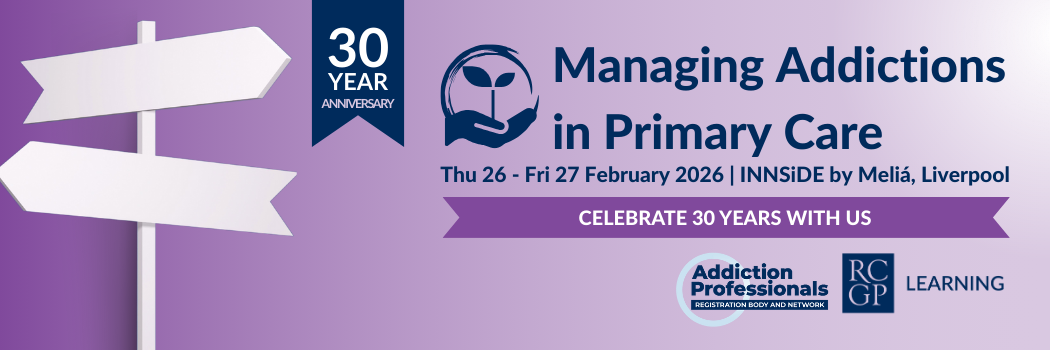
The 30th Managing addictions in primary care conference took place on Thursday 26 and Friday 27 March 2026 in Liverpool. 

Join us and celebrate our 30th anniversary as we bring together pre-eminent experts in the field of substance and behavioural addiction, and offer you the opportunity to listen, learn and network with more than 300 healthcare professionals across the field.

From beginner guides to specialist advice, personal accounts to big picture thinking, - our plenaries and workshops offer something for everyone with an interest in addiction services.   

This conference will reflect on the challenges and improvements over the past thirty years and look forward at how we can improve medicine and support for patients and service users. The programme covers a range of topics both specialised and holistic, and has evolved with the ever-changing addiction care landscape. Alcohol and drug related deaths are at an all-time high in the UK*. This is why harm-reduction, tackling the stigma around addiction to encourage more people to seek help, and understanding how health inequalities impact additions are central focuses this year.   

The standard of the presentations this year was exceptionally high and [] I learned a great deal of new information plus talking points to make me think. Good for networking too. 2025 conference attendee, specialist in addiction psychiatry, Wales, UK.

Increase your knowledge and understanding of:

  • Current interventions for the prevention, assessment and treatment of alcohol, other drug problems and behavioural addictions. 
  • The requirement for both primary care and specialist interventions, and when to use them.
  • Drug and alcohol policies in the UK and how they are implemented in primary care.
  • Links between multiple needs, health inequalities and substance misuse.
  • The challenges, improvements and primary care work in this area over the last 30 years. 
RCGP Learning
 
Sponsored by:
 
Ethypharm logo             Camurus logo

Curriculum: Smoking, Alcohol and Substance Misuse
CPD Points: 6.0
Time to complete this course: 5-6 hours
Date of publication: 13 March 2025
Mode: Webinar
Podcast icon: No
Course index: Show
Section titles: Show
Breadcrumb: Show

This is a recording of a live conference that took place on Friday 27 March 2026. This recording will be available to view until 13 December 2026.

The 30th Managing addictions in primary care conference took place on Thursday 26 and Friday 27 March 2026 in Liverpool. 

Join us and celebrate our 30th anniversary as we bring together pre-eminent experts in the field of substance and behavioural addiction, and offer you the opportunity to listen, learn and network with more than 300 healthcare professionals across the field.

From beginner guides to specialist advice, personal accounts to big picture thinking, - our plenaries and workshops offer something for everyone with an interest in addiction services.   

This conference will reflect on the challenges and improvements over the past thirty years and look forward at how we can improve medicine and support for patients and service users. The programme covers a range of topics both specialised and holistic, and has evolved with the ever-changing addiction care landscape. Alcohol and drug related deaths are at an all-time high in the UK*. This is why harm-reduction, tackling the stigma around addiction to encourage more people to seek help, and understanding how health inequalities impact additions are central focuses this year.   

The standard of the presentations this year was exceptionally high and [] I learned a great deal of new information plus talking points to make me think. Good for networking too. 2025 conference attendee, specialist in addiction psychiatry, Wales, UK.

Increase your knowledge and understanding of:

  • Current interventions for the prevention, assessment and treatment of alcohol, other drug problems and behavioural addictions. 
  • The requirement for both primary care and specialist interventions, and when to use them.
  • Drug and alcohol policies in the UK and how they are implemented in primary care.
  • Links between multiple needs, health inequalities and substance misuse.
  • The challenges, improvements and primary care work in this area over the last 30 years. 
RCGP Learning
 
Sponsored by:
 
Ethypharm logo                Camurus logo
    
Curriculum: Smoking, Alcohol and Substance Misuse
CPD Points: 6.0
Time to complete this course: 5-6 hours
Date of publication: 13 March 2026
Mode: Webinar
Podcast icon: No
Course index: Show
Section titles: Show
Breadcrumb: Show

This is a recording of a live conference that took place on Thursday 26 March 2026. This recording will be available to view until 11 December 2026.

The 30th Managing addictions in primary care conference took place on Thursday 26 and Friday 27 March 2026 in Liverpool. 

Join us and celebrate our 30th anniversary as we bring together pre-eminent experts in the field of substance and behavioural addiction, and offer you the opportunity to listen, learn and network with more than 300 healthcare professionals across the field.

From beginner guides to specialist advice, personal accounts to big picture thinking, - our plenaries and workshops offer something for everyone with an interest in addiction services.   

This conference will reflect on the challenges and improvements over the past thirty years and look forward at how we can improve medicine and support for patients and service users. The programme covers a range of topics both specialised and holistic, and has evolved with the ever-changing addiction care landscape. Alcohol and drug related deaths are at an all-time high in the UK*. This is why harm-reduction, tackling the stigma around addiction to encourage more people to seek help, and understanding how health inequalities impact additions are central focuses this year.   

The standard of the presentations this year was exceptionally high and [] I learned a great deal of new information plus talking points to make me think. Good for networking too. 2025 conference attendee, specialist in addiction psychiatry, Wales, UK

Who attends

All primary care workers including GPs, shared care workers, nurses, specialists, commissioners and researchers. This year we're encouraging medical students to join in.

Increase your knowledge and understanding of:

  • Current interventions for the prevention, assessment and treatment of alcohol, other drug problems and behavioural addictions. 
  • The requirement for both primary care and specialist interventions, and when to use them.
  • Drug and alcohol policies in the UK and how they are implemented in primary care.
  • Links between multiple needs, health inequalities and substance misuse.
  • The challenges, improvements and primary care work in this area over the last 30 years. 

RCGP Learning

Sponsored by:
 
Ethypharm logo             Camurus logo
Curriculum: Smoking, Alcohol and Substance Misuse
CPD Points: 6.0
Time to complete this course: 5-6 hours
Date of publication: 28 February 2025
Mode: Webinar
Podcast icon: No
Course index: Show
Section titles: Show
Breadcrumb: Show

These are the slides from the Artificial intelligence in primary care study day that took place on Wednesday 15 April 2026. These slides will be available to view until 21 January 2027.


Artificial Intelligence (AI) is rapidly transforming healthcare, offering unprecedented opportunities to enhance efficiency and patient care in General Practice. As demand on primary care services continues to rise, AI tools - ranging from digital scribes and triage to administrative support - are becoming essential.


This one-day hybrid study day brings together experts to demystify AI in primary care. The programme explores practical implementations, such as the use of triage and scribes in clinical practice, and how AI can streamline administrative tasks like managing clinic letters. Beyond clinical practice, the event will also cover medical education, addressing both postgraduate training and post-CCT work. The day also includes dedicated training on safety standards and regulations, equipping attendees with the knowledge to navigate the responsibilities of a Clinical Safety Officer - an essential role for using AI in the NHS.


Learning objectives:

By the end of this day, delegates will be able to:

  • Evaluate the practical applications of AI in clinical settings, specifically focusing on the efficacy of triage models and AI-assisted documentation (scribes).
  • Understand the potential for AI to reduce administrative workload and improve practice efficiency.
  • Analyse the medical education landscape and how AI can help with both postgraduate training and continuous professional development.
  • Identify the core responsibilities of a Clinical Safety Officer, including the necessary safety standards and regulatory frameworks required for implementing AI solutions safely.
  • Discuss the challenges and opportunities of AI implementation with peers and experts during panel discussions and Q&A sessions.

Topics:

AI at the coalface:Triage, Scribes, and beyond

  • Triage models scribes
  • Admin for GPs

The future of learning: AI in postgraduate and post-CCT education

  • Post grad training
  • Post CCT work

Governance & Safety: Standards, regulations, and clinical safety officer training

  • Safety standards
  • Regulations and implementation

Chairs:

Dr Benjamin Brown, GP Partner, Clinical Senior Lecturer (The University of Manchester), Medical Director (OneAdvanced)

Dr Selvaseelan Selvarajah, GP Partner, Bromley by Bow Health. RCGP Council Member

Speakers:

Dr Annabelle Painter, Digital Health & AI Clinician

Dr Amar Ahmad FRCGP, Partner & GP Trainer, Wilmslow Health Centre

Dr Fari Ahmad MRCGP, GP Partner & GP Trainer, Appraiser and Neighbourhood Health Lead

Dr Osman Bhatti FRCGP, Clinical Consultant

Dr Hussain Gandhi, GP Partner, Head of eGPlearning

Dr Keith Grimes, Founder & CEO Curistica Ltd, Former GP

Dr Annemarie Cunningham, GP Medical Advisor

Please note, these presentations are only available to those who registered for the event. 

Presentations are not to be shared with others.

RCGP Learning

Curriculum:
CPD Points: 6.0
Time to complete this course: 5-6 hours
Date of publication: 20 April 2026
Mode: Webinar
Podcast icon: No
Course index: Show
Section titles: Show
Breadcrumb: Show

This is a recording of a live webinar that took place on Wednesday 25 March 2026. This recording will be available to view until 10 December 2026.


Biological medicines are complex medicines made or derived from a biological source. A biosimilar medicine (known as a ‘biosimilar’) contains a version of an active substance of an approved biological medicinal product, known as the reference product. Biological medicines are used to treat many conditions including cancers, diabetes, arthritis, psoriasis, neutropenia and enzyme or hormone deficiencies (NHS England, 2023).

Biologic medications are increasingly being used to treat a range of conditions in secondary care, and there is a growing number of biosimilars in use. Primary care rarely gets involved in their use, however with the shift from hospital to community care as part of the NHS 10-Year Health Plan, this webinar will focus on what biosimilars are, their development, and how we can consider the shift to their use in the community.

Webinar Chair:

Dr Kevin Barrett MRCGP, GP New Road Surgery Croxley Green, Divisional Medical Director for Hertfordshire and Deputy Caldicott Guardian CLCH

Webinar speakers:

Dr Marion Sloan, GP & Chair of the Primary Care Society for Gastroenterology, PCSG
Sherwin Criseno, Advanced Nurse Practitioner in Endocrinology
Philip Newland-Jones, Consultant Pharmacist and Honorary Associate Professor in Diabetes and Endocrinology at the University of Southampton

RCGP Learning

Funded by:

Sandoz-Logo.png

This webinar was funded by Sandoz UK. Sandoz were asked to suggest speakers and topics however, full editorial control remains the sole responsibility of the RCGP. 

Curriculum:
CPD Points: 1.5
Time to complete this course: 90 minutes
Mode: Webinar
Podcast icon: No
Course index: Show
Section titles: Show
Breadcrumb: Show

Available until 3 June 2026.


Interpreting electrocardiogram (ECG) results is a key skill for GPs. We need to be comfortable in reading them and then deciding further steps in management. As GPs we need to be familiar with the normal variants and then be able to identify those rhythms that need referrals. These are key skills that help GPs practice safely and with confidence. It is important to avoid unnecessary referrals but also not to overlook findings that would need referral. 

Learning objectives

By the end of this webinar, participants will be able to:

  • Confidently interpret a normal ECG and normal variants
  • Interpret rhythms that need urgent referral to the secondary care
  • Interpret rhythms which need routine referrals


RCGP Learning

Curriculum: Cardiovascular Health
CPD Points: 1.5
Time to complete this course: 90 minutes
Date of publication: 3 December 2025
Mode: Webinar
Podcast icon: No
Course index: Show
Section titles: Show
Breadcrumb: Show

This is a recording of a live webinar that took place on Thursday 20 November 2025. This recording will be available to view until 19 August 2026.

Musculoskeletal (MSK) and Sports injuries are common presentations in primary care, but remote consultations present unique challenges in assessment and diagnosis. With increasing demand for virtual care, GPs need to develop skills and confidence in managing these conditions remotely whilst recognising their limitations. This webinar, led by a GPwER in MSK and Senior Sports and Exercise Medicine registrar, will provide practical guidance on remote assessment, identifying red flags, and making safe and effective management decisions.

Learning objectives
 By the end of this webinar, participants will be able to:

  • Recognise the strengths and limitations of remote MSK assessments and learn key techniques to enhance virtual consultations.
  • Understand how to differentiate common MSK conditions and functional limitations via video or telephone.
  • Identify red flags early and when to escalate care for suspected serious pathology, such as fractures, infections, or inflammatory conditions.
  • Explore practical management strategies for common MSK conditions, including tendinopathies, joint injuries, and back pain.
  • Learn about sports injuries present in active patients, including return-to-play guidance, rehabilitation principles, and prevention strategies.
  • Understand the role of exercise prescription and lifestyle advice for MSK health, including having active conversations and how to integrate social prescribing into care.
  • Discuss emerging trends in MSK care, such as ultrasound in primary care, hybrid (remote and in-person) assessment models, technology and wearables, and access to community-based rehabilitation services.


Chair:

Dr Salman Waqar MRCGP, GP in Berkshire and Honorary Academic GP, Imperial College London

Speaker:

Dr Faisal Shaikh, GP, Clinical lead, Surrey ICS Community MSK Service, and Sports and Exercise Medicine Registrar


RCGP Learning

Curriculum: Musculoskeletal Health
CPD Points: 1.5
Time to complete this course: 90 minutes
Date of publication: 2 December 2025
Mode: Webinar
Podcast icon: No
Course index: Show
Section titles: Show
Breadcrumb: Show

Available until 26 May 2026.


This webinar explores the UK’s uniquely high rates of endometrial cancer, drawing attention to under-recognised risk factors and the limitations of current diagnostic pathways, especially the inconsistent application of fast-track hysteroscopy. With a clinical focus on pre and perimenopausal women, participants will review how to distinguish between heavy and irregular bleeding, when to suspect endometrial cancer, and how to respond with timely, effective investigations.

Learning Objectives: 

  • Recognise key risk factors for endometrial cancer in pre and perimenopausal women.
  • Distinguish between heavy and irregular bleeding and identify red flags.
  • Understand when and how to investigate or refer using current pathways.


RCGP Learning

Curriculum: Maternity and Reproductive Health
CPD Points: 1.5
Time to complete this course: 90 minutes
Date of publication: 24 November 2025
Mode: Webinar
Podcast icon: No
Course index: Show
Section titles: Show
Breadcrumb: Show

Available until 12 May 2026.

Following the recent news that the GLP-1 agonist tirzepatide has been approved by NICE for use outside of hospital settings, this evening webinar aims to enhance understanding of these medications and looks at the way in which they may affect your day-to-day practice. Including prescribing process and logistical elements which you may face as a GP.

Not only will we look at prescribing but also factor into us all seeing more and more patients walk through our doors using weight loss injections privately. These talks will help you better understand all the considerations for providing weight loss injections and provide useful take home tips and updates around what to discuss with patients, including lifestyle advice.

Learning Objectives: 

  • Understand GLP-1 agonists currently for patients living with obesity
  • Discuss potential benefits, risks and side effects of these medications
  • Understand the prescribing process, including up-titration and considerations for other medications
  • Review the NICE eligibility criteria and the NHSE funding variation

RCGP Learning

Curriculum:
CPD Points: 1.5
Time to complete this course: 90 minutes
Date of publication: 12 November 2025
Mode: Webinar
Podcast icon: No
Course index: Hide
Section titles: Hide
Breadcrumb: Hide
 

This is a recording of the Minor surgery discussion day for trainers which took place on Monday 20 January, from 14:00 to 16:30 via Zoom.

Curriculum:
Date of publication: 19 February 2025
Mode: Webinar
Podcast icon: No
Course index: Show
Section titles: Show
Breadcrumb: Hide

Musculoskeletal (MSK) conditions account for up to 30% of general practitioner consultations, representing a substantial clinical workload and a significant societal burden. MSK problems often persist longer than many other conditions, leading to reduced quality of life and wider socioeconomic impact. GPs are pivotal in early recognition, accurate diagnosis, effective management, and preventive care for MSK presentations, helping to minimise disability and support long-term health and wellbeing.

This One Day Essentials conference equips primary care professionals with practical, evidence-based skills to confidently assess and manage MSK conditions in a time-pressured GP setting. Delegates will gain up-to-date knowledge on management of musculoskeletal conditions across the ages, prevention strategies, and the role of physical activity as both a therapeutic and preventive intervention.

Learning Objectives:

  • Strengthen diagnostic confidence by recognising common and important MSK presentations, distinguishing mechanical, inflammatory, and systemic causes, and applying effective history-taking and examination techniques in primary care.
  • Improve examination skills for MSK conditions 
  • Enhance management strategies in MSK conditions seen in primary care
  • Optimise patient outcomes through practical approaches to patient education, self-management support, safe physical activity promotion

Topics include:

  • Gout
  • Physical activity
  • Chronic pain
  • Paediatric rheumatology
  • Osteoporosis
  • Back and hip
  • Shoulder and knee

Conference Chair:

Dr Jean Wong MRCGP, GP and RCGP eLearning fellow


Curriculum: Musculoskeletal Health
CPD Points: 6.0
Time to complete this course: 6-7 hours
Date of publication: 9 February 2026
Mode: Webinar
Podcast icon: No
Course index: Show
Section titles: Show
Breadcrumb: Show

This is a recording of a live conference that took place on 11 December 2025. This recording will be available to view until 20 October 2026.

One in two people will be diagnosed with cancer sometime in their lifetime. These patients will present in your primary care practice often, making general practice a fundamental part in achieving good outcomes for cancer patients.

Learning Objectives:

  • Update knowledge on the latest evidence for early cancer detection
  • Learn to embed safety netting in your clinical practice
  • Expand awareness of novel approaches to cancer detection
  • Understand non-specific symptom (NSS) presentations and use of rapid diagnostic centres (RDCs)
  • Learn how to support cancer patients once diagnosed and living with and beyond their cancer
  • Explore the role of primary care networks and wider primary care teams in improving early diagnosis of cancer

Topics include:

  • Urgent referrals and non-specific symptom pathways including RDCs
  • Safety netting tips and tools
  • Cancer testing and detection (including multi-cancer early detection tests)
  • Haematological cancer update
  • Supporting patients living with cancer including palliative and end of life care
  • Cancer hot topics and the future of primary care in cancer

Conference Chair:

Dr Thomas Round MRCGP, General Practitioner and Academic Clinical Research Fellow


Curriculum:
CPD Points: 6.5
Time to complete this course: 6-7 hours
Date of publication: 1 December 2025
Mode: Webinar
Podcast icon: No
Course index: Show
Section titles: Show
Breadcrumb: Show

Available until 5 June 2026.

Primary care sports medicine focuses extensively on the diagnosis, management and treatment of musculoskeletal injuries and disorders. It encompasses a wide range of disciplines and practices aimed at promoting the health and fitness of athletes and physically active individuals. Understanding sports medicine enables GPs to provide comprehensive care for patients of all ages and activity levels, addressing not just general health but also physical activity-related issues. Join us for a full day of practical and interactive discussion exploring common sports medicine presentations in general practice, and some introductions on how to become involved in this exciting specialty.


Topics include:

  • Rheumatology in sports medicine 
  • Women's health in sports medicine: pregnancy, postpartum & perimenopause
  • Concussion
  • Cardiology in sports
  • Psychological consideration in rehabilitation in sports and exercise medicine
  • Foot and ankle injuries
  • Careers in sports medicine panel discussion 


Learning objectives:

  • Increase delegates’ knowledge on identifying and managing various sporting injuries and medical conditions amongst the physically active population.
  • Gain an appreciation of sex-specific considerations in injury risk, rehabilitation, and exercise physiology.
  • Recognise the psychological factors affecting recovery from sports injuries.
  • Identify training and career pathways to develop a special interest in SEM alongside general practice.


Conference Chair:

Dr Sarah Dyche, Salaried GP at Rosedale Surgery, ECCH GP Associate


RCGP learning logo


Curriculum: Musculoskeletal Health
CPD Points: 6.5
Time to complete this course: 6-7 hours
Date of publication: 2 May 2025
Mode: Webinar
Podcast icon: No
Course index: Show
Section titles: Show
Breadcrumb: Show
Available until 20 March 2026.

ENT is a key specialty for any GP. You rarely have a day in general practice without some form of an ENT encounter, hence a robust knowledge of the subject is important.

This programme has been specifically devised keeping the busy GP in mind. We aim to address the most common and essential learning needs that primary care practitioners have. The topics are handpicked to cover the core and important areas where knowledge of the subject is vital. We aim to fill the day with key points that you can directly translate into your daily practice. This conference will be interactive with plenty of time for Q&A.


Topics include:

  • Basic essential anatomy and physiology required for Primary care.
  • Essential ear conditions 
  • Disorders of the nose and sinuses
  • Disorders of the throat
  • Dizziness approach, diagnosis approach and management
  • Red flags in ENT head and neck
  • Other relevant conditions

RCGP Learning

Bronze sponsor

Breakthrough T1D logo

Ménière’s Society sponsored this conference. Editorial and content decisions were made solely by the RCGP.


Curriculum: Ear, Nose and Throat, Speech and Hearing
CPD Points: 6.5
Time to complete this course: 6-7 hours
Date of publication: 18 June 2025
Mode: Webinar
Podcast icon: No
Course index: Show
Section titles: Show
Breadcrumb: Show