. RCGP Learning
Blog entry by . RCGP Learning
Written by Dr Toni Hazell
Swallowing difficulty (dysphagia) is a common presentation in primary care. Even when not caused by malignancy, it can be associated with significant morbidity, including malnutrition, dehydration, aspiration pneumonia as well as reduced quality of life. Prompt assessment can facilitate early diagnosis and rule out serious underlying pathology such as oropharyngeal or upper gastrointestinal malignancy.
Classification and aetiology
Dysphagia is broadly classified into four types1:
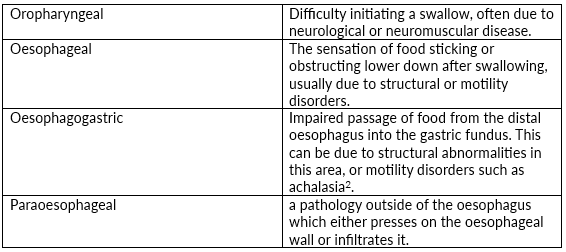
Table 1 - The four classifications of Dysphagia
A careful history can give a starting hint as to the type of dysphagia and therefore guide the diagnostic process.
Dysphagia can have gastrointestinal or non-gastrointestinal causes.
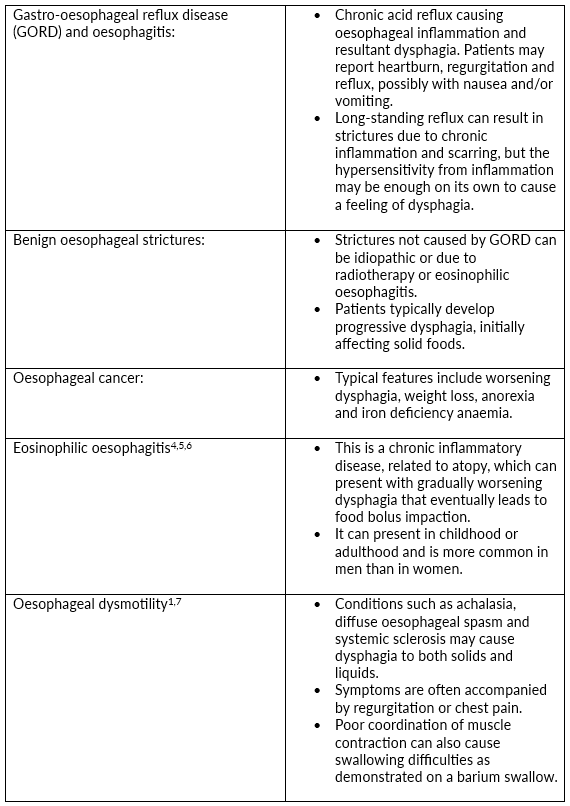
Table 2 - Gastroenterogical causes of Dyshagia
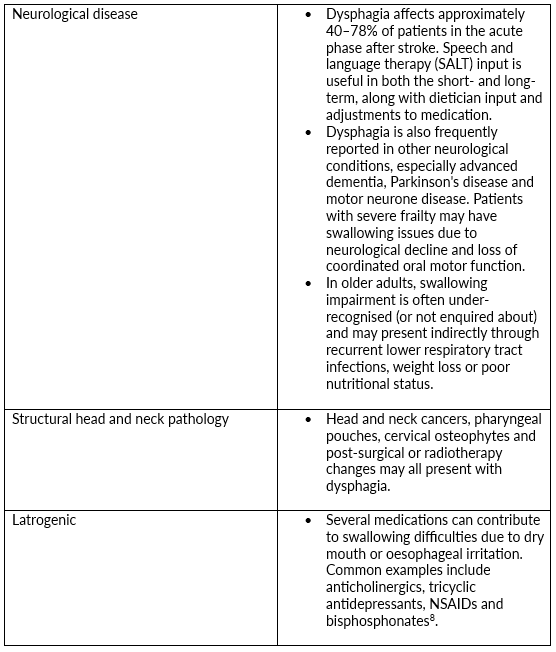
Table 3 - Non-gastroenterological causes of Dysphagia
Clinical assessment
History
Key questions include the following1,9:
- Is the difficulty initiating the swallow or does food stick afterwards?
- Are solids, liquids or both affected?
- Is the problem intermittent or progressive?
- Is there associated weight loss, pneumonia or a history of neurological disease?
- Are there symptoms of reflux, coughing, choking, drooling, hoarseness or nasal regurgitation?
Red flag features include:
- progressive dysphagia
- unintentional weight loss
- iron deficiency anaemia
- haematemesis
- persistent vomiting
- a neck lump
- new-onset dysphagia in older adults.
Examination
Physical examination should include a nutritional assessment, oral cavity examination, cranial nerve assessment, examination of the neck and evaluation for signs of neurological disease and weight loss.
Investigation and referral
NICE recommends urgent endoscopy for all patients presenting with dysphagia3. Additional investigations in secondary care may include:
- barium swallow
- oesophageal manometry
- further imaging to stage any identified malignancy
- biopsies for eosinophilic oesophagitis.
Where endoscopy is normal, but symptoms persist, oesophageal manometry should be considered to identify motility disorders. Patients with suspected oropharyngeal dysphagia should be referred promptly to SALT for specialist assessment and further investigation to identify aspiration or impaired swallow mechanics, and guide management strategies. If malnutrition is suspected, the Malnutrition Universal Screening Tool can be used for assistance10.
Management
Management should target the underlying cause. As well as any medication or surgery, SALT interventions may include swallow rehabilitation exercises, postural modifications and thickening of fluids or food. Refer early to a dietician if there is a risk of malnutrition.
References:
- Wolf DC. Dysphagia. In: Walker HK, Hall WD, Hurst JW, editors. Clinical Methods: The History, Physical, and Laboratory Examinations. 3rd edition. Boston: Butterworths; 1990. Chapter 82.
- Puri R, Tian C. Achalasia. [Updated 2026 Mar 21]. In: StatPearls [Internet]. Treasure Island (FL): StatPearls Publishing; 2026 Jan-.
- NICE. NG12. Suspected cancer: recognition and referral. April 2026.
- Perananthan V, Burgell R. Diagnosis and management of eosinophilic oesophagitis. Aust Prescr. 2024 Feb;47(1):20–5.
- Mona R, Hruz P. Epidemiology of Eosinophilic Esophagitis: Really a Novel and Evolving Disease? Inflamm Intest Dis. 2025 Jan 20;10(1):34-40.
- BSACI. Eosinophilic oesophagitis.
- Kadakuntla A, Juneja A, Sattler S et al. Dysphagia, reflux and related sequelae due to altered physiology in scleroderma. World J Gastroenterol. 2021 Aug 21;27(31):5201-5218.
- Azer SA, Kanugula AK, Kshirsagar RK. Dysphagia. [Updated 2023 Nov 18]. In: StatPearls [Internet]. Treasure Island (FL): StatPearls Publishing; 2026 Jan-.
- NICE. Nutrition support for adults: oral nutrition support, enteral tube feeding and parenteral nutrition. Aug 2017.
- British Association for Parenteral and Enteral Nutrition. Malnutrition Universal Screening Tool.