Royal College of General Practitioners - Online Learning Environment
Site blog
Written by Dr Toni Hazell
Please note further updates may be made to this blog to reflect the concerns about hormonal contraception and meningioma.
Progestogens – in various delivery methods - are commonly used for contraception in the United Kingdom. Oral progestogen-only preparations contain either levonorgestrel, norethisterone, desogestrel, or drospirenone, while combined with an oestrogen desogestrel, gestodene, drospirenone, levonorgestrel, norethisterone and norgestimate are used. The commonest progestogen used in the depot injection is medroxyprogesterone acetate (MPA) – norethisterone enantate is also licensed in the UK but rarely used. The implant contains etonogestrel and levonorgestrel is the progestogen used in intra-uterine devices (IUDs).
Progestogens have for some time been identified as an independent risk factor for meningioma, the most common intracranial tumour in adults, representing around 38% of all primary central nervous system (CNS) tumours and around 53% of all benign brain tumours1. Meningiomas are usually benign, but can cause seizures, cognitive impairment, and focal neurological deficits and frequently require neurosurgical and/or radiation therapy.
Recently, the Patient Safety Commissioner responded to concerns from the public and support groups regarding the association between prolonged use of medroxyprogesterone and an increased risk of intracranial meningioma. There have been several studies in this area from 2024 to 2026; this blog will outline the key features that GPs need to know to be able to counsel their patients on this matter. Those who wish to look in more detail at the studies will find information about them in the CoSRH documents published in March 20242, July 20253, June 20264 and July 20265.
The main risk factors for meningioma are age and female sex; incidence per 100,000 of the population rises from 0.16 under the age of 19 to 18.69 over the age of 404. With uncommon conditions such as this, the need to understand the difference between absolute and relative risk is vital. For example, a woman using the depot injection is, on average, 9.7 times more likely to have a meningioma than one who isn’t using the depot, but for someone in their early 30s, the number needed to harm (NNH) is 24,238 i.e. this number of women would need to use the depot for their to be one extra case of depot associated meningioma5. Most of us would react quite differently to being told that there is a nearly 10-fold increase in risk, compared to being told that nearly 25,000 people would have to use this medication for one to be caused harm. Those who wish to know more about how to counsel on absolute and relative risk might want to look at the RCGP ‘Five minutes to change your practice’ screencast on explaining risk to patients.
In brief, the links between meningioma and progestogens are as follows, as we understand them in September 2026:
- The highest odds ratio is for MPA (9.70) – all the other progestogens known to be associated with increased risk have an odds ratio between 1.62 and 2.53. This list consists of combined oral contraception (COC) containing cyproterone, desogestrel, drospirenone, gestodene or levonorgestrel, the desogestrel progestogen only pill (POP) and the 52mg levonorgestrel intrauterine device (LNG-IUD).
- The absolute risk for all of these progestogens is small – the 2026 paper gives an overall NNH of 4,337 for the MPA depot, with the desogestrel POP, the 52mg LNG-IUD (Mirena®, Benilexa® and Levosert®) and COCs containing cyproterone, desogestrel and drospirenone having NNHs of between 20,000 and 30,000. The desogestrel POP and the gestodene containing COCs have NNHs above 30,000.
- As mentioned above, for younger women with a lower background risk, the NNH falls even further. For example, for those aged under 19, the NNH for the MPA injection is close to 500,000 and for the 52mg LNG-IUD it is over 2.5 million.
- There is no increased risk of meningioma with the norethisterone POP, COCs containing norethisterone and norgestimate and the lower dose LNG-IUDs (Kyleena® and Jaydess®). There is also clearly no increased risk with the non-hormonal methods such as the copper IUD or condoms.
CoSRH advice in their various documents on this matter is as follows:
- When we are counselling patients who are starting or continuing hormonal contraception, we should explain that meningioma is an uncommon tumour which is usually benign and that the absolute risk remains low – this is particularly the case for younger women5.
- Women starting methods containing cyproterone acetate, nomegestrol acetate, MPA or desogestrel should particularly be informed about the increased risk of meningioma4.
- The risk of meningioma should be considered alongside the benefits of effective contraception, using a shared decision-making process5.
- For women who are under the care of neurosurgery for a current meningioma, their specialist should be contacted for advice about continuing any form of hormonal contraception. Advice should also be sought before starting any hormonal contraception in women with a history of meningioma4.
Translating complex scenarios into words that our patients understand is what GPs do best. By counselling them on their contraceptive choices we can help our patients understand the risks and benefits of any proposed intervention, so that they can make a decision that they are happy with.
References:
- Alruwaili AA, Hall WA. Meningioma. 2026 Jun 19. In: StatPearls [Internet]. Treasure Island (FL): StatPearls Publishing; 2026 Jan–. [Accessed September 2026].
- CoSRH. FSRH CEU Statement: Response to new study by Roland et al (2024). Use of progestogens and the risk of intracranial meningioma: national case-control study. March 2024. [Accessed September 2026].
- CoSRH. FSRH CEU Statement: Response to new study by Roland et al (2025). ‘Oral contraceptives with progestogens desogestrel or levonorgestrel and risk of intracranial meningioma: national case-control study.’ July 2025. [Accessed September 2026].
- CoSRH. CoSRH Statement: Meningioma and Progestogens. June 2026. [Accessed September 2026].
- CoSRH. CoSRH CEU Statement: Response to new study by Lundstrøm et al. (2026). Contraceptive Progestogens and Incident Meningioma. July 2026. [Accessed September 2026].
- CoSRH. Combined hormonal contraception. October 2023. [Accessed September 2026].
Written by Dr Toni Hazell
It wasn’t what I wanted in my stocking as a child, but as a full-blown contraception nerd, I’m excited at the December 2025 launch of the new UK Medical Eligibility Criteria for contraceptive use (UKMEC)1. Published by the College of Sexual and Reproductive Healthcare (CoSRH), formerly the Faculty of Sexual and Reproductive Healthcare, the UKMEC is the gold-standard document on contraceptive safety.
Before getting into the changes, there are some important basics to remember:
- The UKMEC is about safety, not efficacy, although the document does include an efficacy table (figure 1).
- Methods are categorised from 1-4, as per figure 2. 1 and 4 are simple – no problem to use or absolutely contraindicated respectively; it’s in the 2s and 3s that your clinical judgment will be important.
- The UKMEC is one place where 2 + 2 ≠ 4. Two category 2s doesn’t automatically mean an absolute contraindication, but if they are both in the same area, it does signal a cumulative risk and the need for caution. More than one category 3 ‘may pose an unacceptable risk’.1
- Some methods have different numbers for initiation or continuation, reflecting the different risks attached to starting a method or continuing one that is already being used.
- If a condition isn’t covered in the UKMEC, that doesn’t necessarily mean that all contraception is safe for use. Consider seeking advice from secondary care, or, if you are a CoSRH member, submit an evidence request to their Clinical Effectiveness Unit and they will summarise the available evidence for you to use alongside your clinical judgment.2
- The UKMEC is intended to be applied only to contraceptive use. If a woman is getting an extra benefit from her method (for example the management of endometriosis), that may affect your risk/benefit calculation.
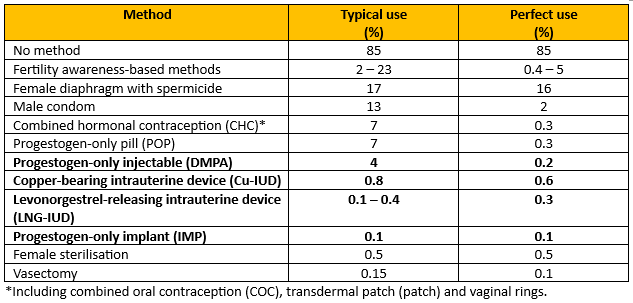
Figure 1 - Recreation of Percentage of women experiencing an unintended pregnancy within the first year of year of use with typical use and perfect use.
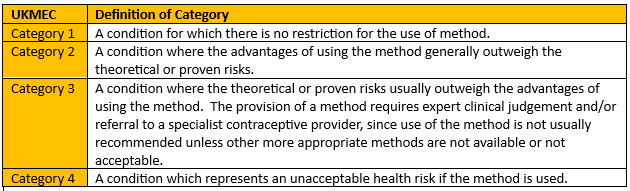
Figure 2 - Recreation of Definition of UKMEC categories
The key changes are summarised in figure 3.
|
Topic(s) |
Key change |
|
Chronic kidney disease. Multiple sclerosis.
|
|
|
Use of e-cigarettes. Sickle cell trait. |
|
|
Multiple category changes for the depot medroxyprogesterone acetate (DMPA) injection. |
|
|
Depression and anxiety |
|
|
Stroke |
|
|
Breast cancer |
|
|
Human papilloma virus and sexually transmitted infections. |
|
|
HIV |
|
|
Hypertension |
|
|
Multiple risk factors for VTE and CVD |
|
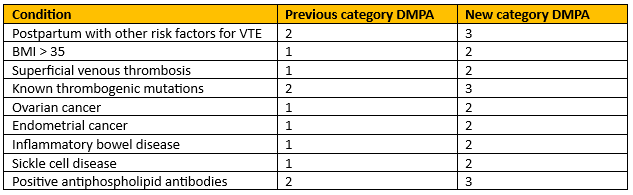
Figure 4 - Recreation of Conditions with increased risk of thrombosis.
Chronic Kidney Disease
Regarding CKD, only the most seriously affected are included – patients who either have nephrotic syndrome or are on dialysis. This cohort should not use CHC (due to VTE risk), and DMPA is now UKMEC 3. This is because DMPA is associated with a small loss in bone mineral density, reversible on stopping3 and those with chronic kidney disease (CKD) are already at risk of osteoporosis4. All other methods are a UKMEC 2.
Multiple sclerosis
The risk from MS is mainly to do with immobility as a risk factor for VTE, so most methods are a UKMEC 1 for those without prolonged immobility, the exception being DMPA, which is a 2, because those with MS have a greater risk of fracture than the greater population. With prolonged immobility, DMPA remains a 2 and CHC is a 3.
When prescribing hormonal contraception, it is common to be asked about whether it will cause mood changes. Mood alteration is listed as a common or very common side-effect in the BNF for some combined and progestogen only methods5,6,7 but depression was listed in the previous UKMEC as a category 1. It has been removed from this edition as a category and replaced with a statement about the effects of hormonal contraception in those with anxiety or mood disorders.
The key points are as follows8:
- There is no clear evidence that any form of hormonal contraception worsens or improves mood.
- Most evidence is from observational studies, which often have confounding factors, and do not usually focus on women with pre-existing mental health conditions.
- Some patients do report mood change during the use of hormonal contraception; this may not represent direct causation.
- Healthcare professionals should explore other possible contributing factors and consider alternative contraception if the patient feels that their mood has been adversely affected by their contraception.
- Patients with pre-existing anxiety or depression should monitor their mood when starting hormonal contraception.
There are two sections on multiple risk factors – one for CVD and one for VTE; the section on multiple risk factors for VTE has been updated in this iteration. The UKMEC signposts to NICE for a full list of risk factors but gives examples which include cancer, inflammatory disorders, recent trauma or surgery and being in the postnatal period. Someone with multiple risk factors for VTE is UKMEC 4 for CHC, 3 for DMPA and 1 for all other methods.
The UKMEC is a long document; it will take time for the changes to fully bed in, but practices will need to decide how they implement it, particularly for those already using contraception. Reviewing all those using DMPA at the time of their next injection, and everyone else at their annual review would be a good start and hopefully we will all be fully up to date with it long before the next one comes along in a decade or so!
References
- CoSRH. UK Medical Eligibility Criteria for Contraceptive Use (UKMEC). Dec 2025.
- CoSRH. Members’ Evidence Request Service.
- CoSRH. Progestogen-only Injectable Contraception. July 2023.
- National Osteoporosis Guideline Group UK. Clinical guideline for the prevention and treatment of osteoporosis. 2024.
- BNF. Ethinylestradiol with levonorgestrel.2025.
- BNF. Desogestrel.2025.
- BNF. Etonogestrel. 2025.